Things to Do in Ubud with Kids: Our Family Travel Guide
From rice fields and temples to waterfalls and cultural activities, Ubud is a must-visit destination on any family trip to Bali. After several stays with our kids, I'm sharing our favourite things to do, where to eat and stay, and my tips for exploring Ubud without rushing around!
In central Ubud
1. Visit the Monkey Forest
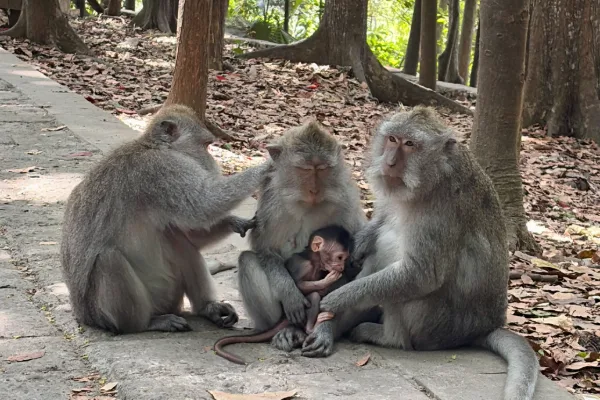
It's Bali's best-known and most touristy monkey forest, but outside peak hours, it's still a fantastic place to visit!
The macaques roam freely, the temples and statues are beautiful, and the enormous banyan trees are particularly impressive. These trees belong to the fig family and grow aerial roots that hang down from their branches, sometimes forming new trunks when they reach the ground.
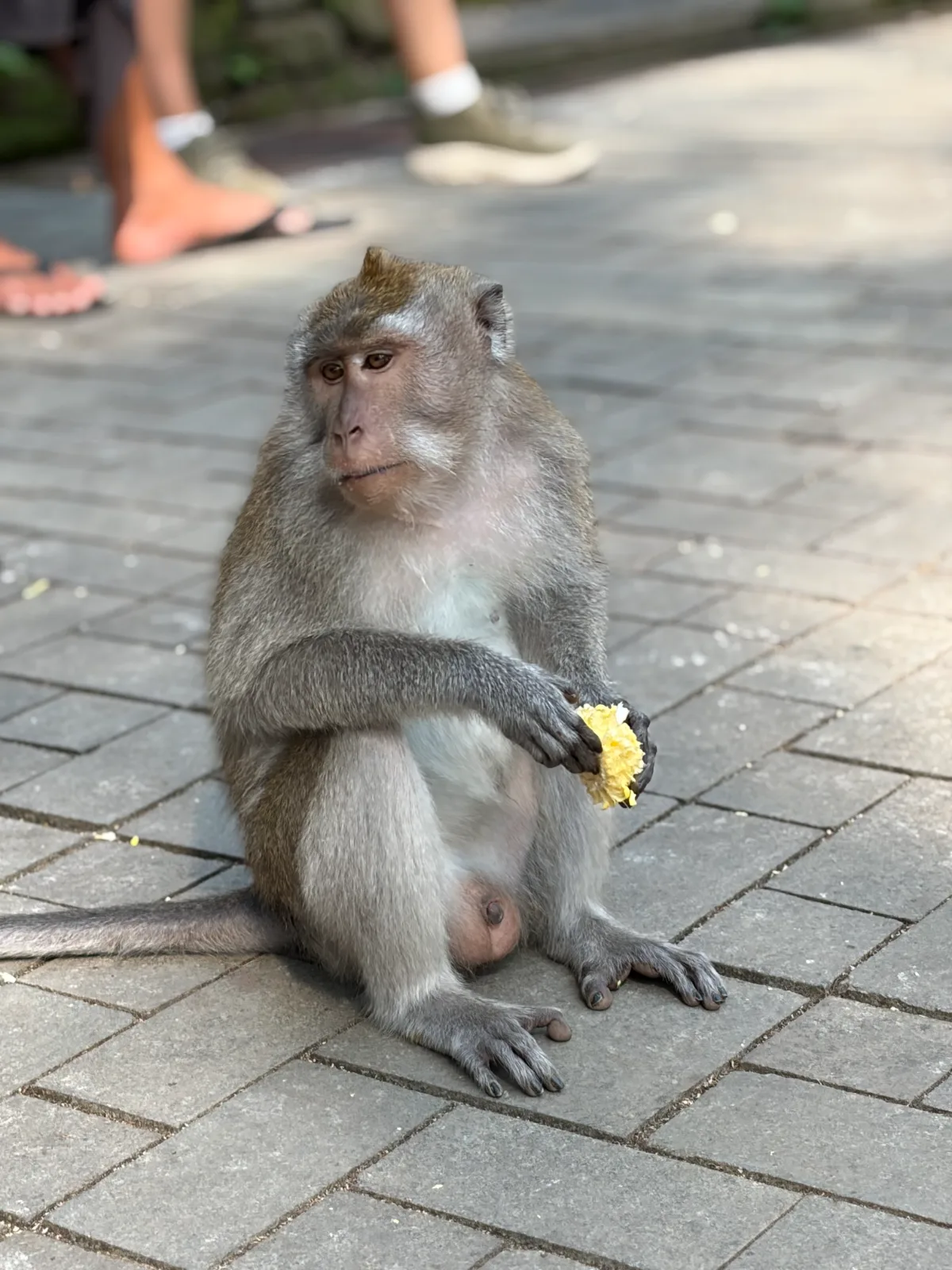
A few precautions when visiting with kids:
- Always keep your children close.
- Don't bring any food, even hidden inside your bag.
- Put away your sunglasses and anything the monkeys might grab.
- Don't touch or feed the monkeys.
Be aware of the risk of rabies, too. If you or your child is bitten or scratched, immediately wash the wound with soap and water for at least 15 minutes and seek medical attention promptly, even if you've been vaccinated.
If you're looking for an alternative, you can also visit the Sangeh Monkey Forest, a little further from central Ubud.
2. Explore the Sweet Orange Trail
Right in the heart of Ubud, an unassuming little path leads you to beautiful rice fields, far away from the hustle and bustle of the town's busy streets.
It's one of my absolute favourite spots, especially in the late afternoon, during golden hour!
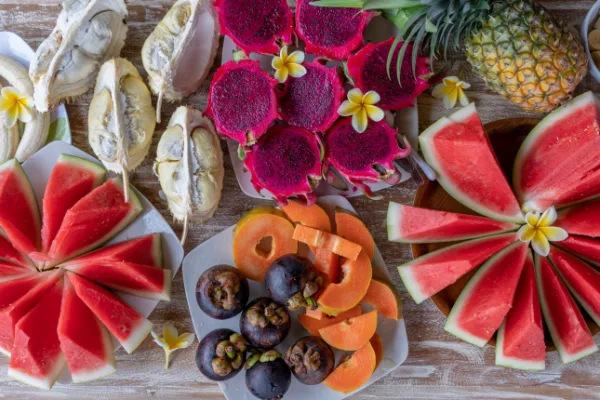
There's even a lovely elderly lady, whom you can respectfully call 'Ibu', selling fruit along the trail. Why not buy some for your kids' afternoon snack? It's a great opportunity for them to discover new flavours or try the little local bananas if you'd rather play it safe!
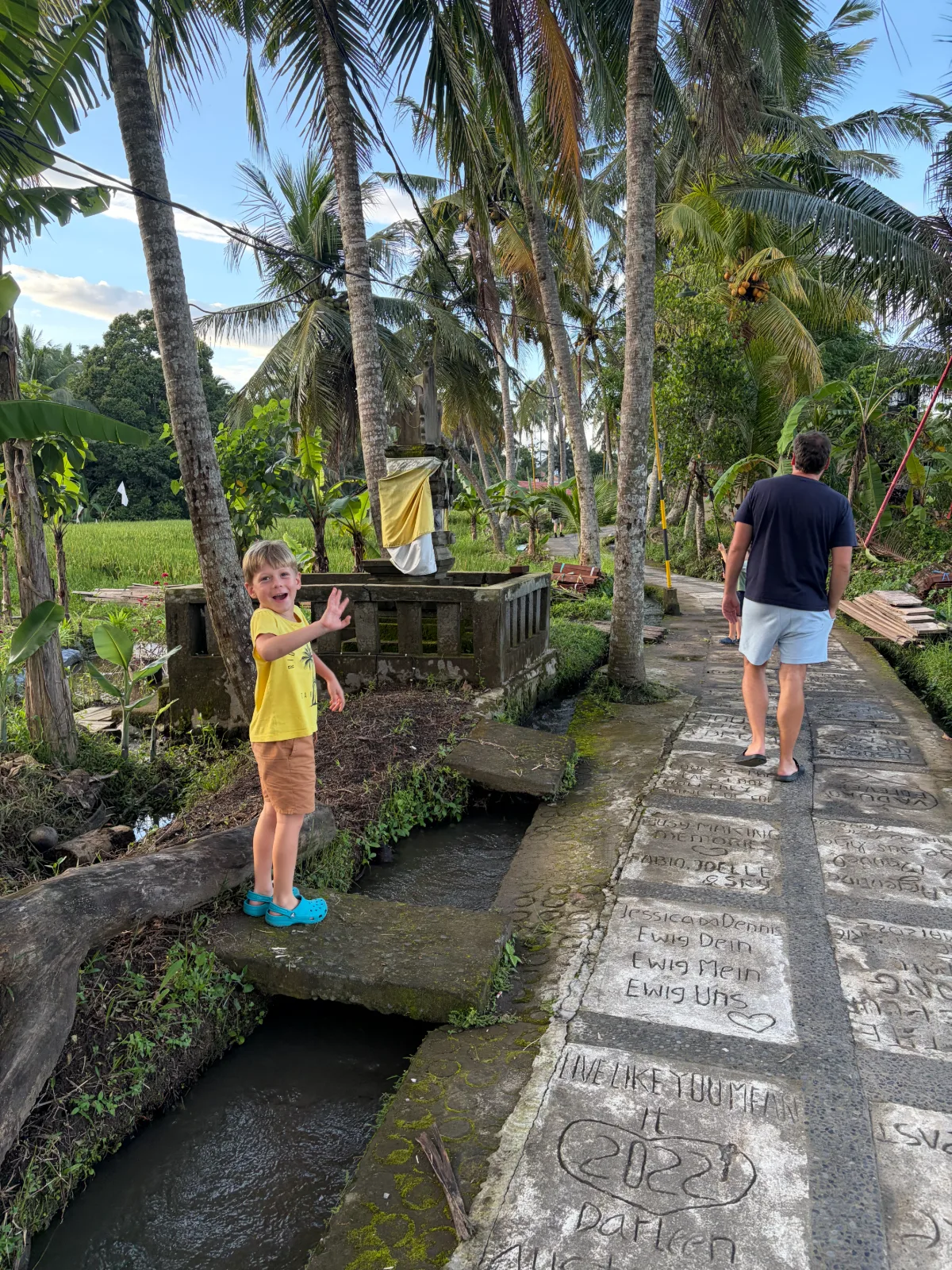
You can then stop at Sweet Orange Warung for a fresh coconut or a meal surrounded by rice fields.
And if you'd like to leave your own little mark on Bali by personalising one of the paving stones along the trail, just ask at the warung!
3. Browse Ubud Market
Souvenirs, clothes, rattan bags, handicrafts… You'll find a bit of everything!
Head there early in the morning to avoid the heat and hopefully take advantage of the famous 'morning prices'.
Many Balinese shopkeepers believe that their first sale of the day brings good luck. If you're their first customer, they may be more willing to negotiate.
You might even see them gently tap their merchandise with the banknote you've just handed them, hoping to attract good luck and prosperity for the rest of the day.
Bargaining is part of the fun, but remember that the extra IDR 20,000 you're trying to save might be very little to you, while for them, it could pay for a local meal!
4. Discover Ubud Water Palace and watch a traditional Balinese dance
Ubud Water Palace, also known as Pura Taman Saraswati, is a temple built in the early 1950s and dedicated to Saraswati, the Hindu goddess of knowledge, literature and the arts.
With its lotus ponds, sculptures and traditional Balinese architecture, it's a beautiful place.
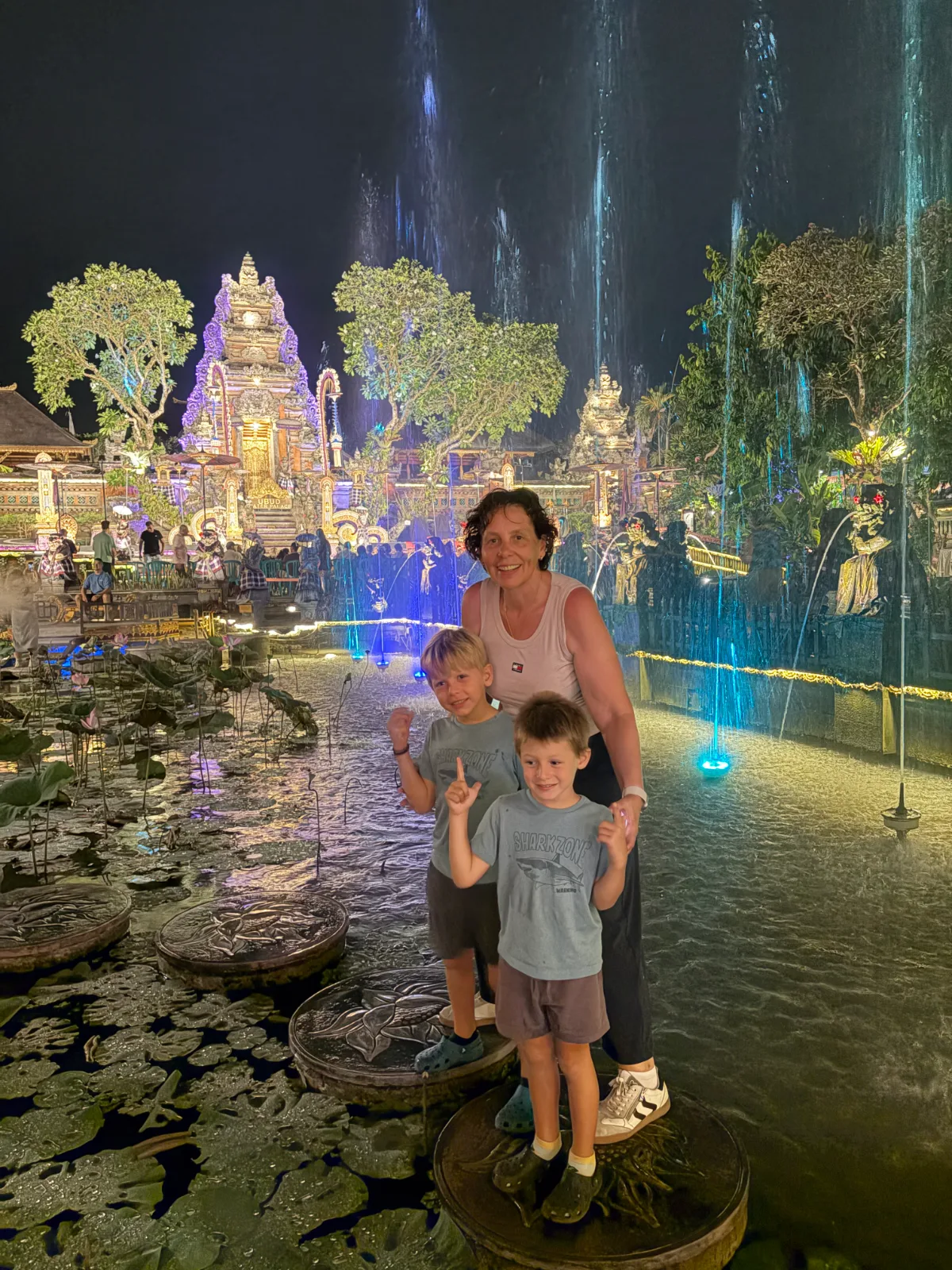
My honest opinion? It's become quite the tourist attraction, but I still think it's worth visiting at least once!
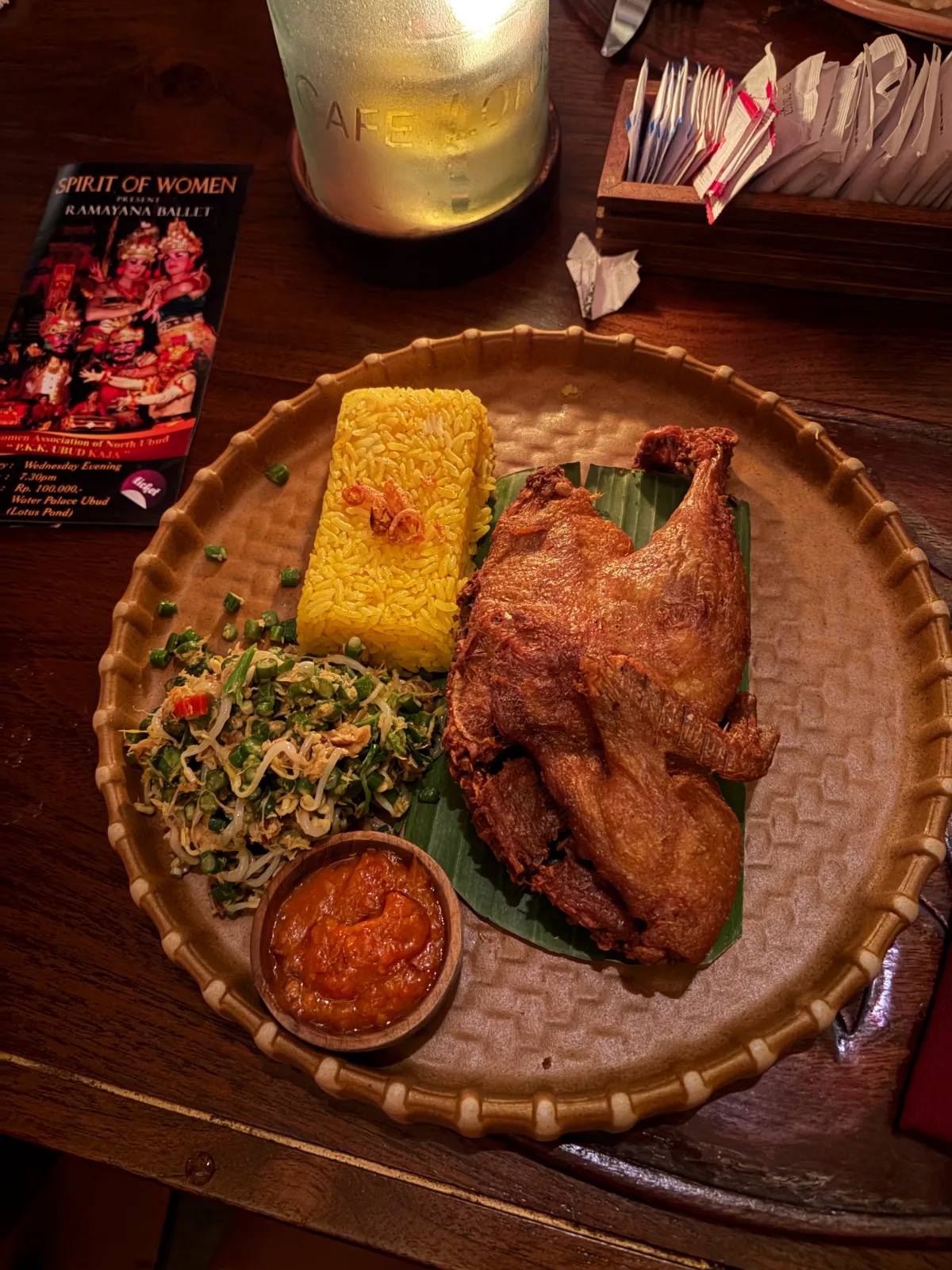
I recommend having dinner at The Café Lotus in the evening. You can enjoy delicious Indonesian food while watching a traditional Balinese dance performance in front of the illuminated temple.
We watched the Ramayana Ballet, which tells the story of Prince Rama and his wife, Sita. After being kidnapped by Ravana, the demon king, Sita is rescued by Rama with the help of Hanuman, the monkey god, and his army.
Tell your children the story before the show so they can better understand what's happening on stage!
Performances usually begin at 7:30 pm, and the programme varies depending on the day of the week. Make sure you book a table for 7 pm and request a good view of the stage.
Around Ubud
5. Explore the waterfalls
There are countless waterfalls around Ubud. Here are the ones we've visited as a family.
- Manuaba Waterfall
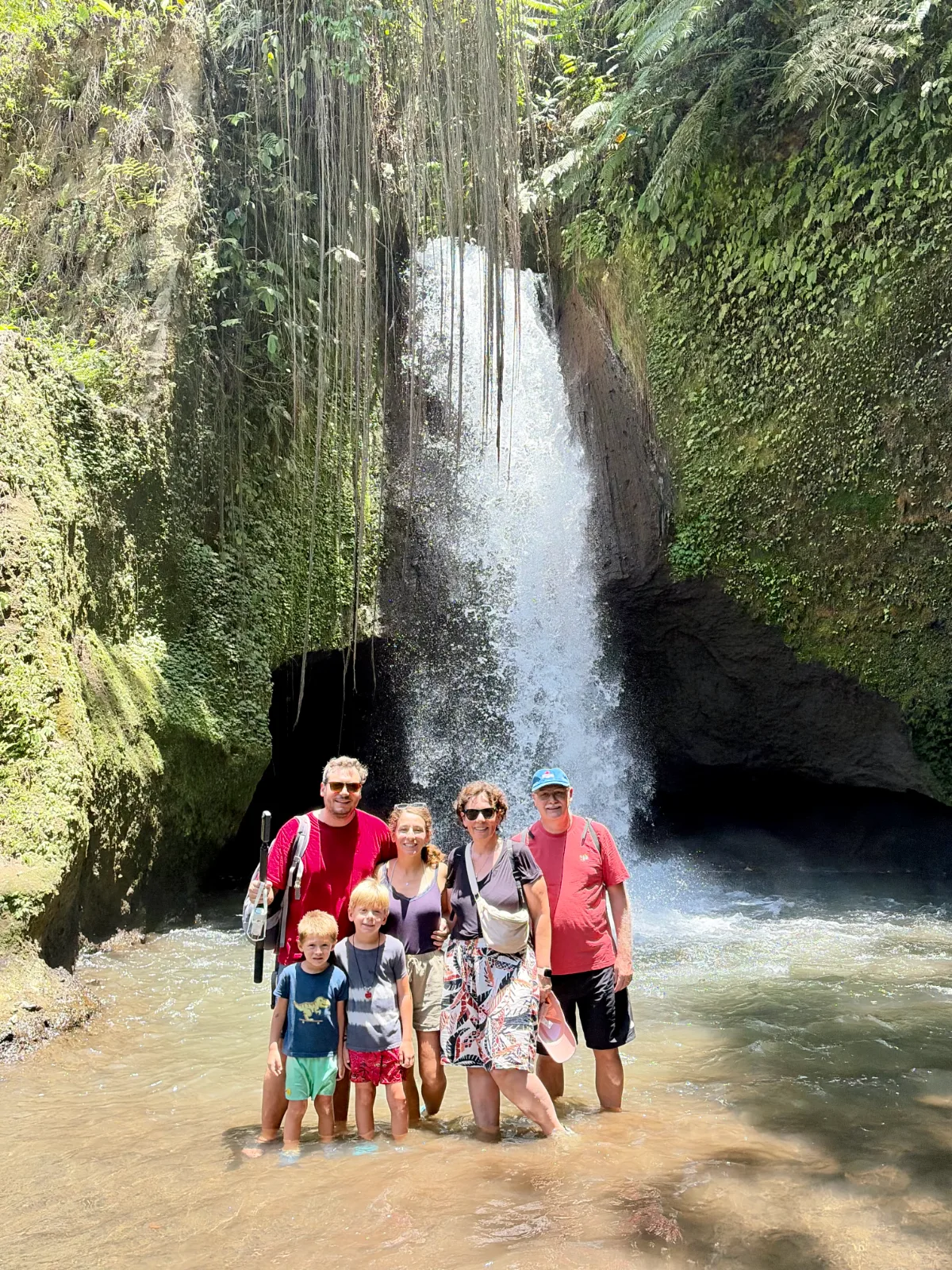
Manuaba consists of two natural waterfalls. During our last visit, the trail had changed: we had to retrace our steps after visiting the first waterfall and take a second path to reach the next one.
Both waterfalls are accessible with children who are comfortable walking (ours were 4 and 7), but make sure you wear suitable shoes as the terrain can be slippery.
What did the boys love most? To reach the second waterfall, you have to walk through the water in a small canyon. When we visited in October, the water was about halfway up our calves.
There isn't much opportunity for swimming at the base of the second waterfall, which is even more impressive than the first. However, you can continue along the path to Crystal Waterfall.
- Crystal Manuaba Waterfall
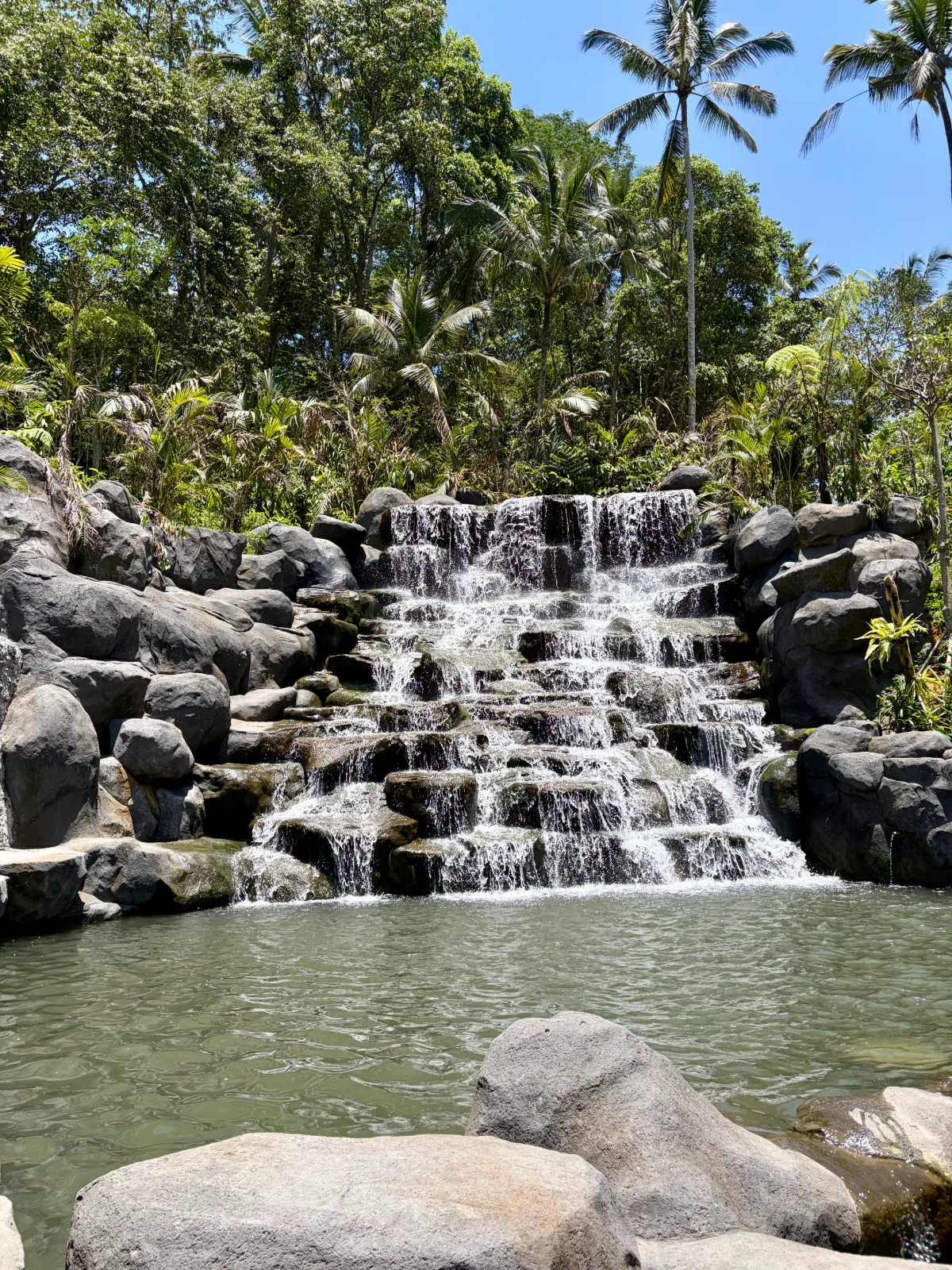
Accessible from Manuaba's second waterfall, Crystal Waterfall is entirely man-made! It opened in October 2026. When we visited, there was an additional charge of IDR 40,000 per person if you wanted to swim.
It's quite a nice spot to cool off with the kids and grab a drink, but let's be honest: it was clearly designed for Instagram!
If you're mainly looking for natural waterfalls, Manuaba's two original waterfalls are well worth visiting on their own.
- Bangkiang Jaran Waterfall & Hidden Canyon
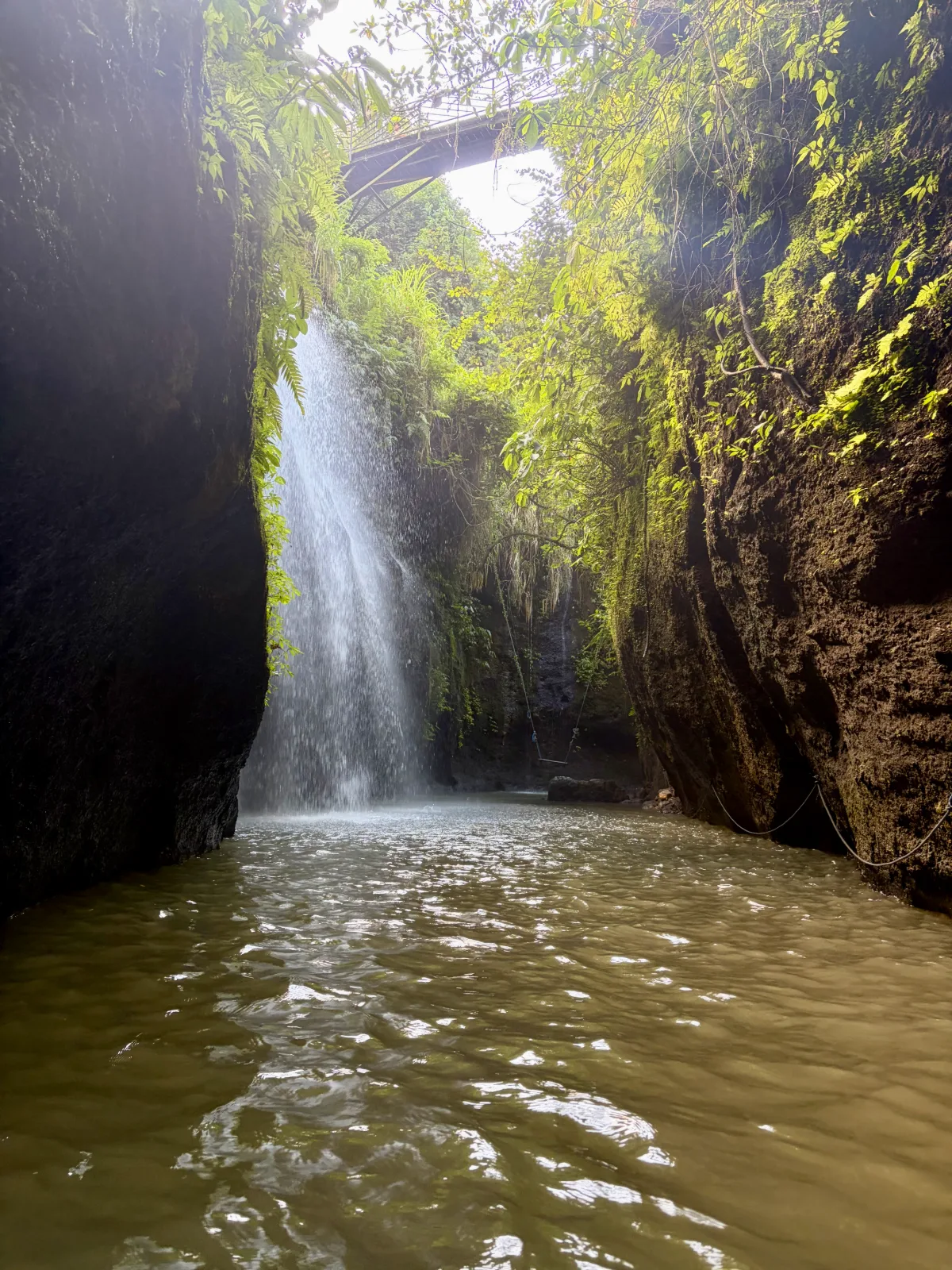
Be careful with younger children, as some of the stairs leading down are very steep and don't always have handrails.
That said, the place is absolutely beautiful! You'll descend into a canyon, where you'll need to wade through the water to reach the different waterfalls.
During our visit, life jackets and flotation rings were available at the bottom. The water can get well above waist height in some places, so don't forget your swimwear!
At the very end, you'll even find a swing. And here's a little tip: the last waterfall has the warmest water!
For all these waterfalls, avoid entering the canyons during or after heavy rainfall, as water levels can rise very quickly.
6. Take a Balinese cooking class
There are plenty of cooking classes around Ubud. You can also ask your hotel, as some organise their own classes.
I recommend choosing one that includes a visit to a traditional market. It's a great opportunity to discover the different fruits, vegetables, spices and ingredients used in Indonesian cooking.
You'll then learn how to prepare some local favourites: gado-gado (vegetables served with peanut sauce), satay skewers, nasi goreng (fried rice), mie goreng (fried noodles)…
And the best part? Getting to eat everything you've made!
7. Make your own traditional Balinese kite
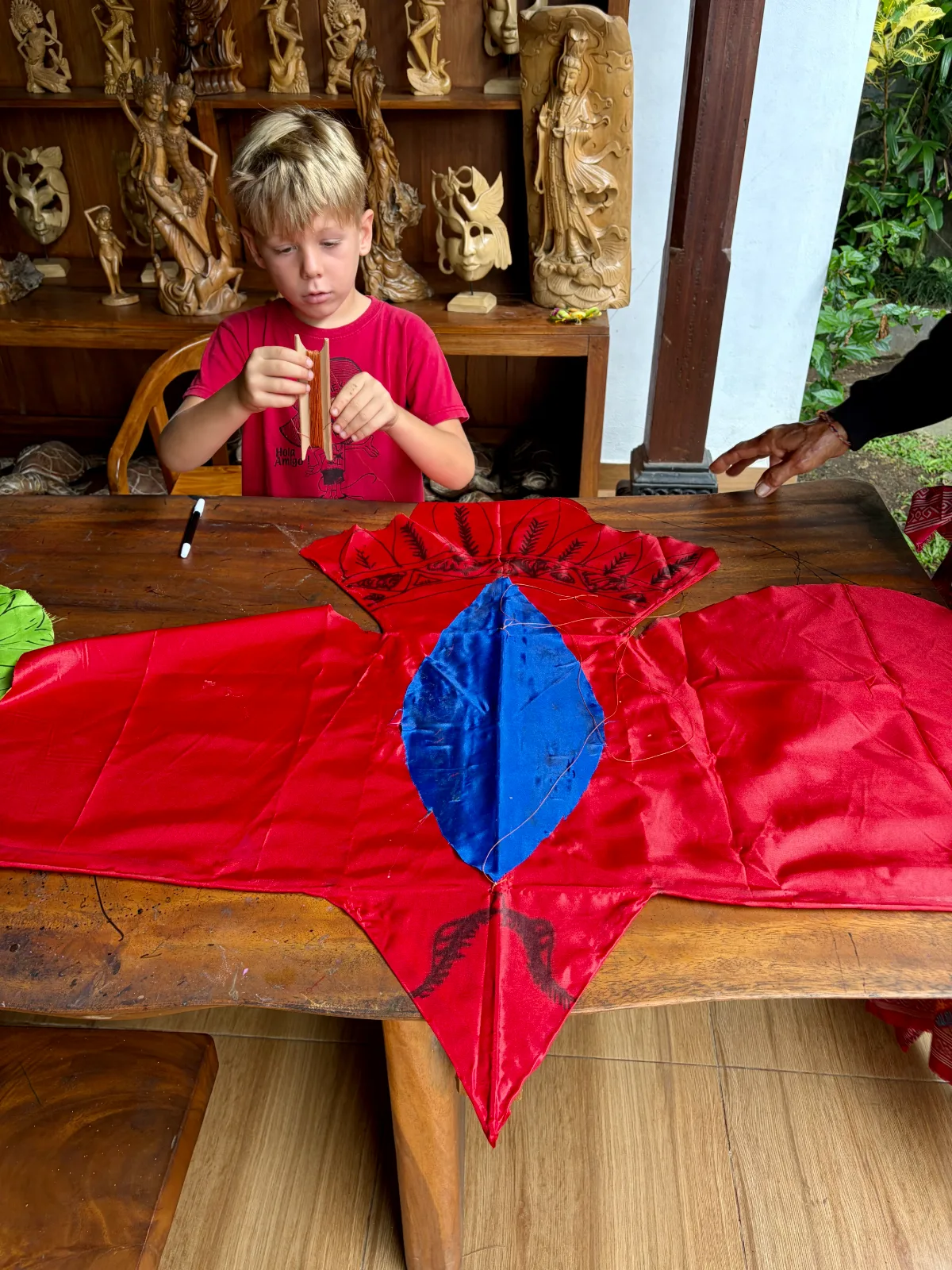
Kites, known as layang-layang in Indonesian, hold an important place in Balinese culture.
This tradition has historically been linked to agriculture and Hindu beliefs. Flying kites is a way of thanking the gods for the harvest and symbolically sending prayers towards the sky.
Even today, building, transporting and flying giant kites can involve dozens of people from the same banjar (local village or neighbourhood community).
We visited Purna's workshop with the boys, where we made our own kite from scratch: cutting the bamboo, assembling the frame, attaching the strings to create tension, choosing the colour of our fabric and gluing it into place.
Then came the decorating and, finally, the moment we could fly it.
The kids were so proud to see something they'd made with their own hands flying in the sky!
Workshop Instagram: @balipurmaart. They also offer jewellery-making and woodcarving workshops.
8. Spend a day with a local Balinese family
In the small village of Keliki, north of Ubud, Le Bali de Ganyar offers an immersive day with a local Balinese family.
The programme includes exploring rice fields, learning about rice cultivation, making traditional coconut oil from scratch, creating Balinese offerings and enjoying a delicious homemade meal prepared by Ganyar’s husband.
What makes this experience particularly great for kids is that they actively participate in the activities while discovering Balinese traditions in a fun and interactive way.
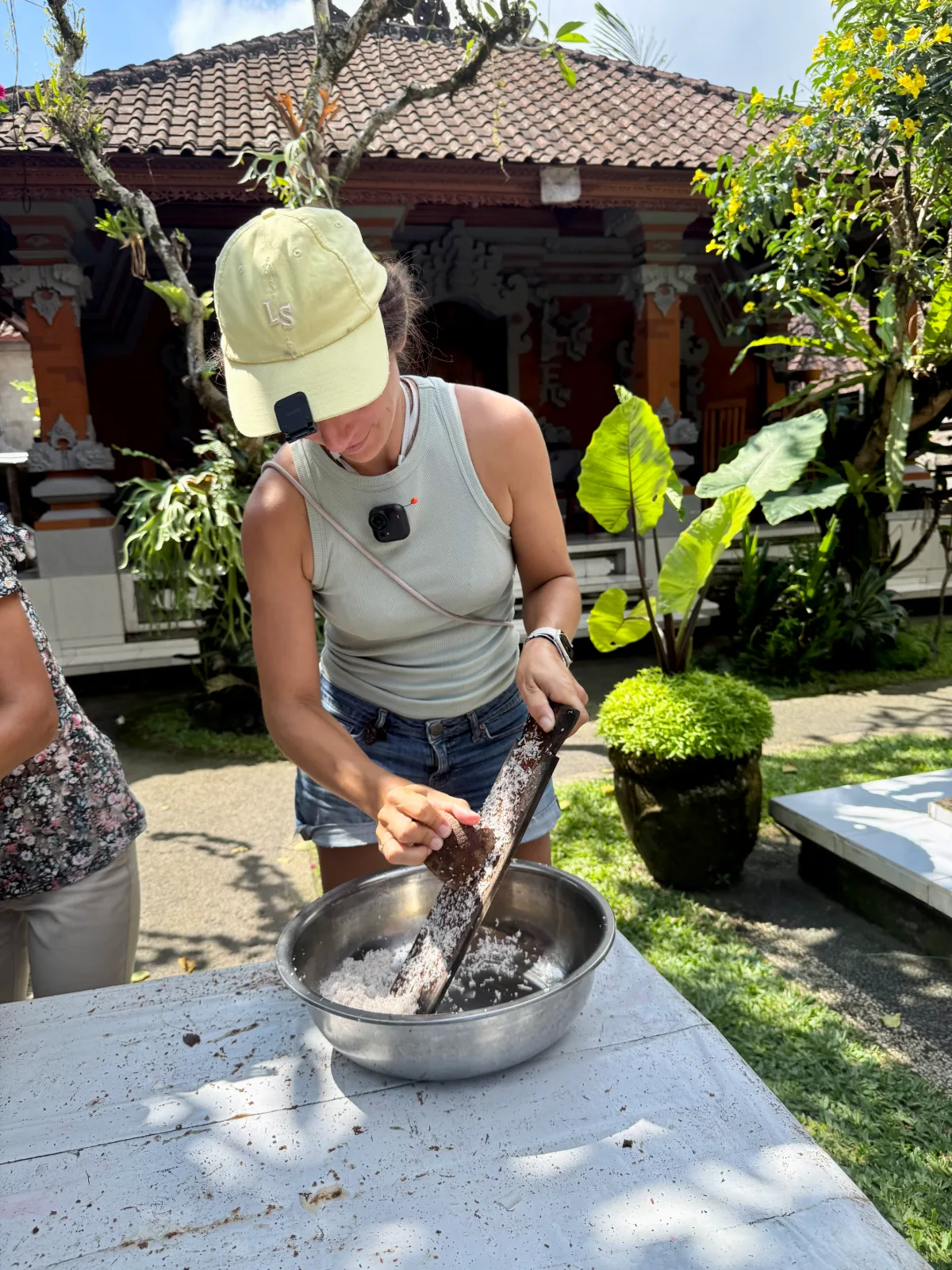
Ganyar is also so funny that the day just flies by!
It’s a wonderful opportunity to gain a deeper understanding of Balinese daily life, beliefs and traditions.
You’ll even get to take home your handmade offering and a small bottle of coconut oil you helped make!
Please note: This particular experience is conducted entirely in French. However, similar cultural immersion experiences are available in English around Ubud.
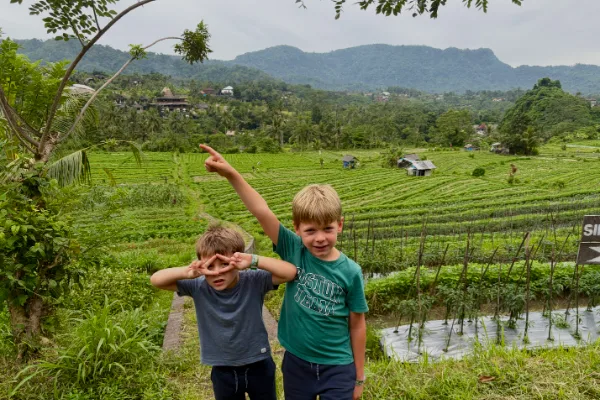
9. Discover the Tegallalang rice terraces
The Tegallalang rice terraces are among Bali's most famous rice fields.
They rely on the Subak, a centuries-old traditional irrigation system. Through a network of canals and a cooperative approach, farmers share the water needed to grow their rice.
The system is also based on the Balinese philosophy of Tri Hita Karana, which promotes harmony between people, nature and the gods. Several cultural landscapes associated with the Subak system have been listed as UNESCO World Heritage Sites since 2012.
Take a walk through the terraces and don't hesitate to venture beyond the overly touristy restaurants and famous swings, while sticking to the designated paths!
Go early in the morning to avoid the heat, the crowds and the queues of Instagrammers waiting to take THAT photo!
How many days should you spend in Ubud?
To explore central Ubud and the surrounding area without constantly rushing around with the kids, I'd recommend spending a minimum of three nights, although personally, I'd go for at least four!
There's so much to discover in this part of Bali that it would be a shame to spend your entire stay rushing from one activity to the next.
Where to stay in Ubud with kids?
We've stayed at Bali Sila Bisma twice, paying between €45 and €55 per night for a family room sleeping four, including breakfast.
The first time, we had one double bed and two single beds. The second time, we had two double beds.
The rooms are spacious, and the hotel has two swimming pools shared between only a handful of rooms, so it almost feels like having your own private pool.
It's a small, welcoming, family-run hotel in a great location, with a generous breakfast.
Definitely somewhere I'd recommend for a family stay in Ubud!
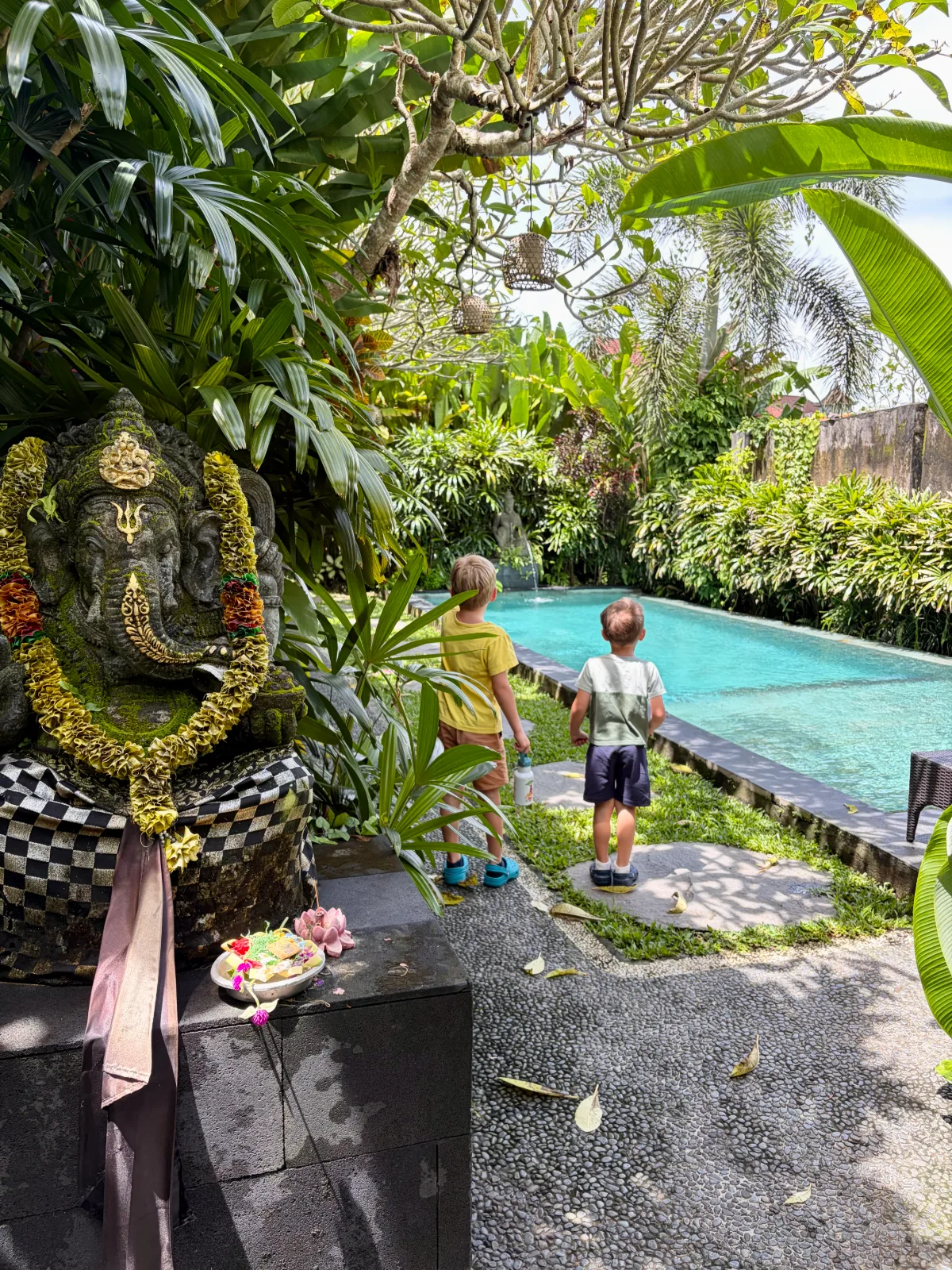
Check prices and availability at Bali Sila Bisma on Booking.com.
Where to eat in Ubud with kids?
Here are a few restaurants we've tried and really enjoyed as a family.
- ShamanaMama Restaurant, located right next to Bali Sila Bisma, is super kid-friendly, with a play area for little ones and an air-conditioned dining room (no one's going to say no to a bit of air con after a morning of sightseeing!).
The menu is fairly straightforward, with Western favourites such as pasta and pizza, as well as a few Indonesian dishes.
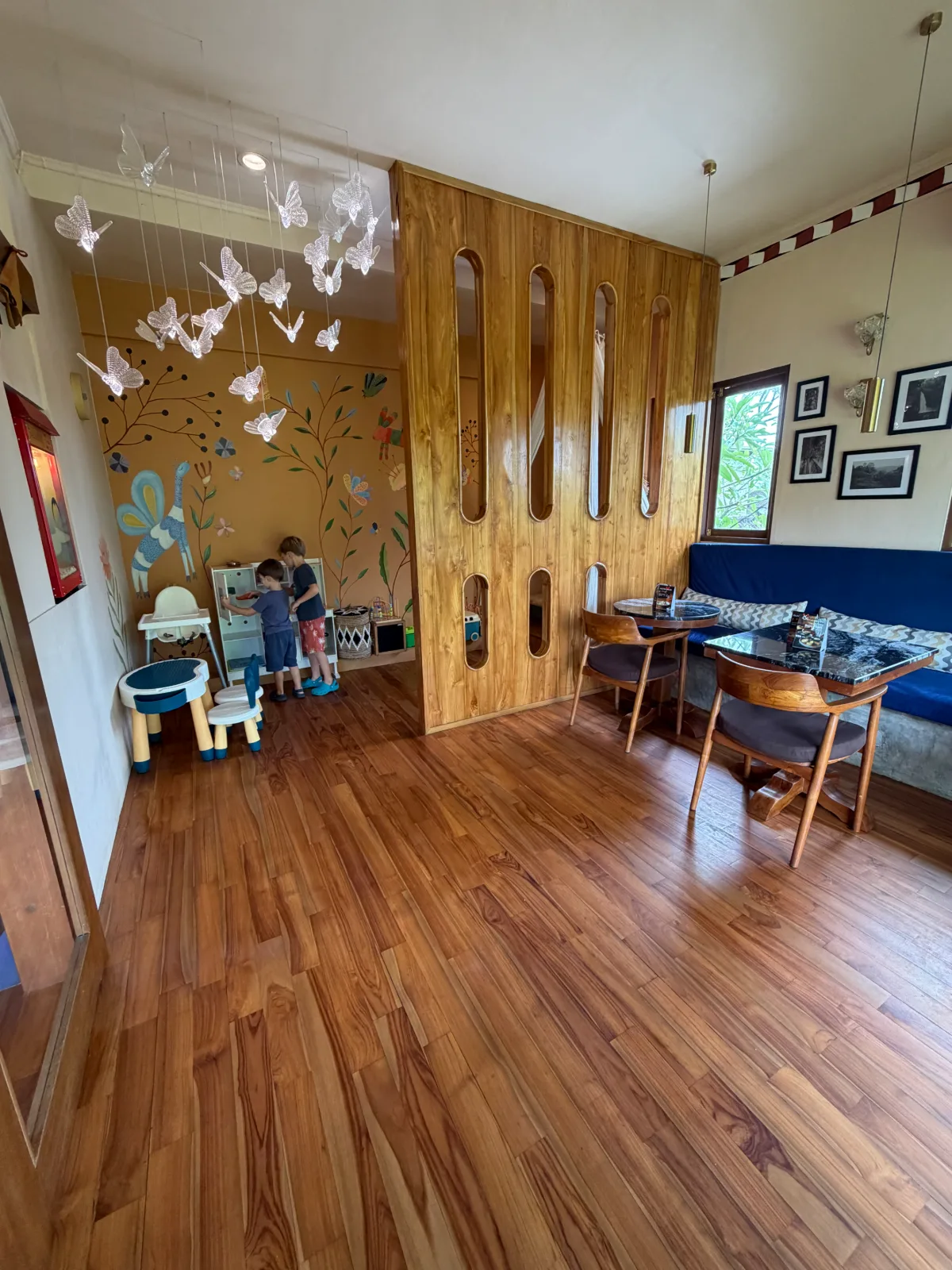
- The restaurant at Bucu View Resort, just down the hill from Bali Sila Bisma, is located within a resort that looks pretty amazing, too!
The food is delicious, and there's a large garden where the kids can run around and burn off some energy.
The restaurant is outdoors but undercover, so it can get quite warm during the day.
- Bordo, for anyone missing French food!
Run by a Frenchman, this restaurant serves French-inspired cuisine. From starters to dessert, we absolutely loved our meal.
- The Café Lotus, the restaurant at Ubud Water Palace that I mentioned earlier.
An additional charge applies if you want to dine overlooking the lotus ponds and enjoy the traditional Balinese dance performance.
We really enjoyed the food, but remember to ask for 'tidak pedas' (not spicy) if you don't like chilli!
- Sweet Orange Warung, for delicious local food surrounded by rice fields. The setting is beautiful, especially in the late afternoon.
Make sure you book ahead if you're planning to have dinner there, as it can fill up quickly.
My tips for visiting Ubud with kids
Choose your accommodation location carefully
I recommend staying somewhere along Jalan Bisma. It's centrally located yet relatively quiet, especially once you get a little further away from the main road.
We walked to most of the attractions in central Ubud, allowing around 10 to 20 minutes depending on our destination (and how fast the kids were walking, of course!).
You can also book a car through Grab or Gojek if the kids are tired or it's getting too hot. Just be aware that pick-ups can be tricky in certain parts of central Ubud.
Pram or baby carrier?
Ubud's footpaths are quite chaotic, when there are any at all!
I'd recommend a baby carrier rather than a pram if your little one isn't walking yet, especially for walks through the rice fields.
Getting around the Ubud area
For attractions further away, you can book a car through Grab or Gojek, or hire a private driver for a few hours or the whole day.
You can also ask your driver whether they're available to wait for you and arrange the return journey. We've always had positive responses when doing this!
If they're waiting for a while, allow for an extra payment. It might only be a small amount to you, but it can make a real difference to them. :)
Keep in mind that journeys arranged outside the app may not be covered by its insurance or safety features.
Adjust your sightseeing schedule to suit the kids
It obviously depends on your children's ages and your usual routine, but I'd recommend not packing too much into each day.
Start early while it's still cool, then plan some pool time or a nap after lunch. It gets hot, and everyone benefits from a little downtime!
You can then head out again around 3 or 4 pm to enjoy the late afternoon.
You're on holiday, after all, so stop watching the clock!
What if your kids became little Ubud explorers?
Spotting macaques, recognising a banyan tree, learning how rice grows, discovering Balinese legends or making their own kite… There's so much to learn while travelling around Bali!
It's this desire to encourage my own children's curiosity that inspired me to create my explorer books.
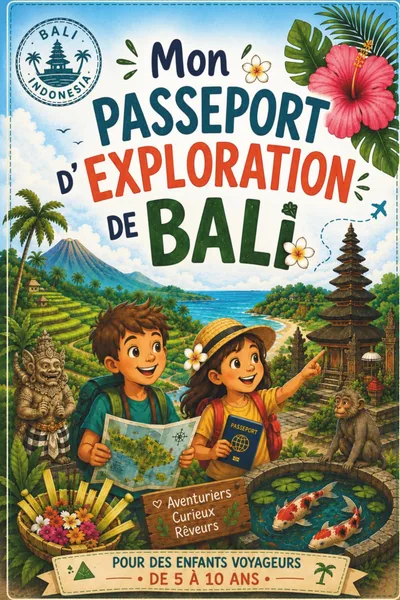
My Bali Explorer Passport, designed for children aged 5 to 10, includes discovery pages, games, colouring activities and introductions to Balinese culture. It's available in both English and French.
For older children, the Bali Exploration Journal, designed for ages 8 to 14, also features missions to complete during the trip and pages to record their travel memories. This edition is currently available in French.
A different way to explore Bali together as a family!